People are often skeptical at the mention of "free money." Pop culture has taught us that there's always a catch. When the Joker dumped $20-million in cash on a crowd of parade goers in Tim Burton's Batman, that windfall came with a side of hot air balloons spewing poisonous gas. But here are five examples of…
Sunday, 23 November 2014

Sunday, 5 October 2014
Happy Fall Season!
The Fall is so colourful, as mother nature slowly fades the vibrant colours of summer into shades of brown, red and orange. Fall has a unique, hard to describe feeling about it too. An almost instinctive feeling about anticipation, preparation and celebration that has been passed down traditionally for generations. Back to school, hockey and football seasons begin, Thanksgiving, then Halloween, then the American Thanksgiving unofficially launching Christmas! In between time, chores around getting ready for winter the house seem to never end.
We hope these photos will provide ideas for you during the Fall Season.
\\\\\\happy Thankgiving to all!!


http://www.selfstor.ca/#!celebrating-thanksgiving/cc1u
Sunday, 28 September 2014
Get ready for Winter!
Fall foliage is beautiful, but without proper protection, the plants you've potted over the summer, can become a headache as soon as the temperature begins to drop. To help you prepare your greenery for cooler temps, we reached out to Lowe's Canada and connected with their spokesman, Blake Miller, for the company's top gardening tips. Last…
Monday, 1 September 2014
Beat the Cold Weather and Save Money
Simple Ways To Winterize Your Home And Lower Your Heating Bill.
Experts estimate that the average Canadian could spend over $1,800 on electricity and natural gas bills, with a good portion of that cost owing to cold drafts and lost heat during the winter months. Here are some hints to lower heating costs.
Furnace Filters:
Check furnace filters once a month for dust buildup and replace if necessary. At minimum, clean or replace them every three months, as a dirt and dust clogged filter will hinder the efficient operation of the furnace. A furnace typically should get a checkup every two years in order to identify issues, preventing expensive breakdowns.
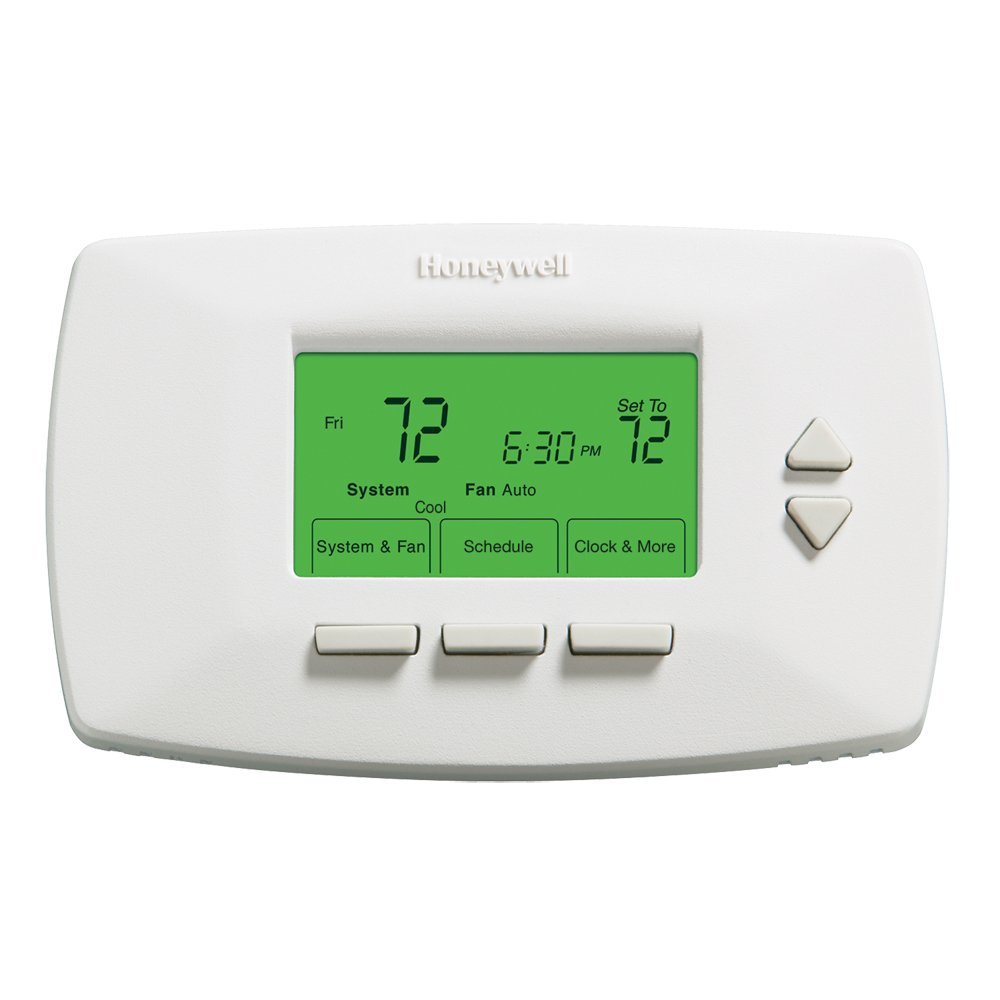
Setting your thermostat back by 5°C for eight hours a day can help you save as much as 15% off your heating bill. It is most efficient to keep your home at 20-22°C when you’re at home, and at 16°C to 18°C otherwise (when no one is home, and at bedtime). Using a programmable thermostat is worth the investment. Don't worry, contrary to belief, your furnace doesn't actually work extra hard to bring the temperature back up.

When temperatures outside are still comfortable (before freezing), clean your gutters and downspouts of leaves and and any debris which can clog. This will avoid melting ice seeping into your roof shingles.
Fireplaces:
This is also a good time to check the fireplace damper to ensure it is operational. Remember to close the damper when not in use.
Attic Insulation:
When it snows on your roof, and the snow doesn't melt, that is an indication that your attic is well insulated. In other words, the snow not melting is a good sign!
Windows:
For obvious drafts originating from window sills or sashes, the best remedy is weather stripping. Or perhaps
 the reason for the draft is a lack of insulation at the window jambs (where the window meets the wall) or behind moldings. Re-caulk areas where there is open space between the window casing and the house. Other do-it-yourself methods include plastic insulating film, bubble wrap, and insulating drapes. An efficient solution is adding storm windows with energy star certification.
Keep curtains open during the day to allow the warmth of the sun, and close them at night to help keep precious heat in.
Keep curtains open during the day to allow the warmth of the sun, and close them at night to help keep precious heat in.

Replace worn or damaged door seals and door sweeps, if you feel a draft in these areas, or if you can see light through where the door meets the frame, you will know it's time for repairs. The do it yourselfer will find these easily replaceable items at your local hardware store. Stopping the cool drafts originating from these areas will keep you cozier, and reduce your heating bill.
Door and window draft snakes work well too, and some of them are adorable.
Close the doors and the heat vents in unused rooms. Keep the vents open in the basement though, even if you don't use that space much, as a cold basement will make the first floor of your home feel cold.
Other Ideas to Keep Warm!
- Ceiling fans will push the warmer air down and balance the temperature in the room.
- After using the oven, leave the oven door open to make use of the heat.
- Put on a sweater, socks and cosy slippers instead of turning up the thermometer. It's great to snuggle up on the couch with a blanket to watch TV or while enjoying a novel.
Please share your tips on keeping warm with us! :)
Sunday, 17 August 2014
When it comes to space solutions, one size doesn’t fit all
When it comes to space solutions, one size doesn’t fit all
Terrence Belford – Globe and Mail
Anyone who has ever lived in a Toronto condo – or an apartment – knows storage poses a challenge. If you live in a house, you just pile stuff away in the basement, the attic or the garage.
With a condo, however, there are none of these handy spaces to set aside things you may need in future or want to save in case someone else does. Where do you put the Christmas tree, the bicycle, the old rowing machine you thought you would use to trim down or the sofa that is still too good to relegate to a landfill?
The options boil down to three: buy a storage locker in your condo building – if any are still available; rent a cubicle in a public self-storage facility; or see if a friend or relative with a house or garage is willing to store your stuff.
I can’t help you with the last one. My basement is full – same with my garage. But I can tell you what the experts say about the other two.
First, storage lockers in Toronto condo buildings. Five years ago the price of most new condos included both a storage locker and a parking spot. Those days are fast disappearing. Builders today generally sell storage lockers as separate items.
The cost can range from somewhere just north of $100 to $500 a square foot, depending on the project, says Mark Cohen, senior vice-president at the Condo Store Marketing Systems. At the same time, lockers are larger these days then they were five years ago.
“At one point the city demanded they be large enough to store a bicycle,” he says. “So size grew from maybe three feet by five feet to four feet by six feet.”
What you get is pretty basic, a cubicle walled by chicken wire or chain link fencing, tucked away in a basement level, although in more upscale projects, lockers have been moved to ground level.
“With quite a few new buildings nowadays they are located behind the lobby. The idea is to make them more accessible to cyclists,” he says. “You would be surprised how many Bay Street lawyers cycle to work.”
You should also know that there are never as many lockers as there are suites. Builders generally create enough for 60 to 70% of the units and they usually don’t sell all that quickly, Mr. Cohen says.
“They are eventually absorbed but it can take the resale market to finally sell them out,” he says.

The small spaces in Toronto condos can make storage a challenge
Part of the reason they are not hot ticket items is because some buyers, especially first-timers, are already squeezing nickels to cover down payments, closing costs and all the expenses associated with moving in. Laying out another $2,500 to $5,000 has a low priority. It is often only after living in their suite a while they realize it is storage-challenged.
Which brings us to rentals in self-storage facilities. On the plus side, they come in a range of sizes, are usually climate controlled, are open round-the-clock and have state-of-the-art security.
The downside is that they can be expensive if you need a locker on a long-term basis.
At the new Spaces Self Storage on Eastern Avenue just east of Broadview Avenue in Toronto, a five-foot-by-five-foot cubicle costs $69 a month while the largest (10 by 20) goes for $399. The most popular is probably the five-foot-by-10-foot storage unit, which goes for $155 a month, says Stuart Skeete, operations manager.
He says 60% of Spaces’ business comes from the residential sector but condos play a relatively small role. His customers are mainly home owners needing a place to store furniture for future use.
“We are, however, increasingly seeing local condo owners taking units for things like golf clubs and other recreational stuff they don’t have room to store in their suites,” he says.
Those who rent storage units are generally older and better off financially, says Mike Cowie who has three storage operations in the Greater Toronto area, all under the Self Stor banner.
“First-time buyers are too concerned about just making the down payment, mortgage and monthly maintenance fees to worry about storage space,” he says. “Besides most of them have yet to accumulate enough stuff to need storage.”
He also says that Canadians are less mobile than our counterparts south of the border and while they are great savers of stuff, their preference is to pack it into a basement or garage – theirs or someone else’s.
“In the U.S. there is four square feet of commercial storage space for every man, women and child; in Canada there is just one square foot,” he says.
Mind you that may change as the men and women who have bought condos in Toronto over the past decade start the inevitable process of accumulating stuff. Your much loved but tired old couch just will not fit in a condo storage locker.
————————————————————————————————————
Subscribe to:
Posts (Atom)